
My-ENT

Procedure

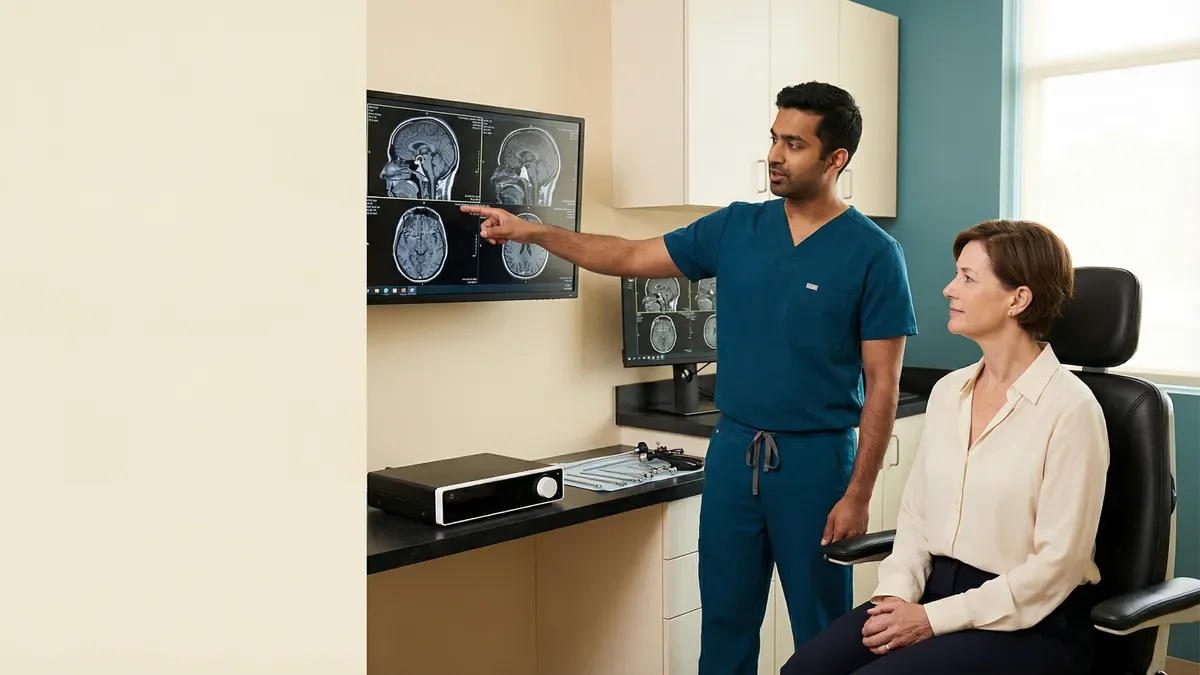
Transsphenoidal pituitary surgery view representing endoscopic access through the nose.

Transsphenoidal pituitary surgery

Transsphenoidal pituitary surgery is an endoscopic approach through the nose to access selected pituitary lesions. It is planned jointly by ENT and neurosurgical teams, with treatment decisions guided by imaging, endocrine assessment, and the broader clinical picture.

Indications

When this may be discussed

  • Selected pituitary lesions identified on specialist imaging and endocrine review.
  • Symptoms or functional concerns linked to pituitary mass effect in appropriate cases.
  • Cases where minimally invasive transnasal access is considered suitable by the team.
  • Need for tissue diagnosis or decompression as part of multidisciplinary management.
  • Situations where combined ENT-neurosurgical planning supports this approach.

What to expect

Before and on the day

Preoperative planning typically includes imaging, blood tests, and coordinated specialist review. The surgery is performed endoscopically via the nasal passages with no external facial incisions. The operative approach, potential risks, and hospital planning are discussed carefully before treatment.

Post-operative care

Post-operative care

Recovery after any surgical procedure requires careful attention to the instructions provided by your treating surgeon. These instructions are tailored to your specific procedure and individual circumstances and should be followed precisely. If you have questions about your recovery, or if you experience symptoms that concern you, contact the rooms directly during business hours on 02 9247 1762. After hours, if you have an urgent concern, please present to your nearest emergency department.

Recovery

Recovery overview

Hospital and home recovery plans are individual and coordinated with surgical and endocrine teams. Follow-up may include endoscopic nasal review, endocrine monitoring, and repeat imaging where indicated. Patients receive practical guidance about activity, nasal care, and escalation pathways for concerns.